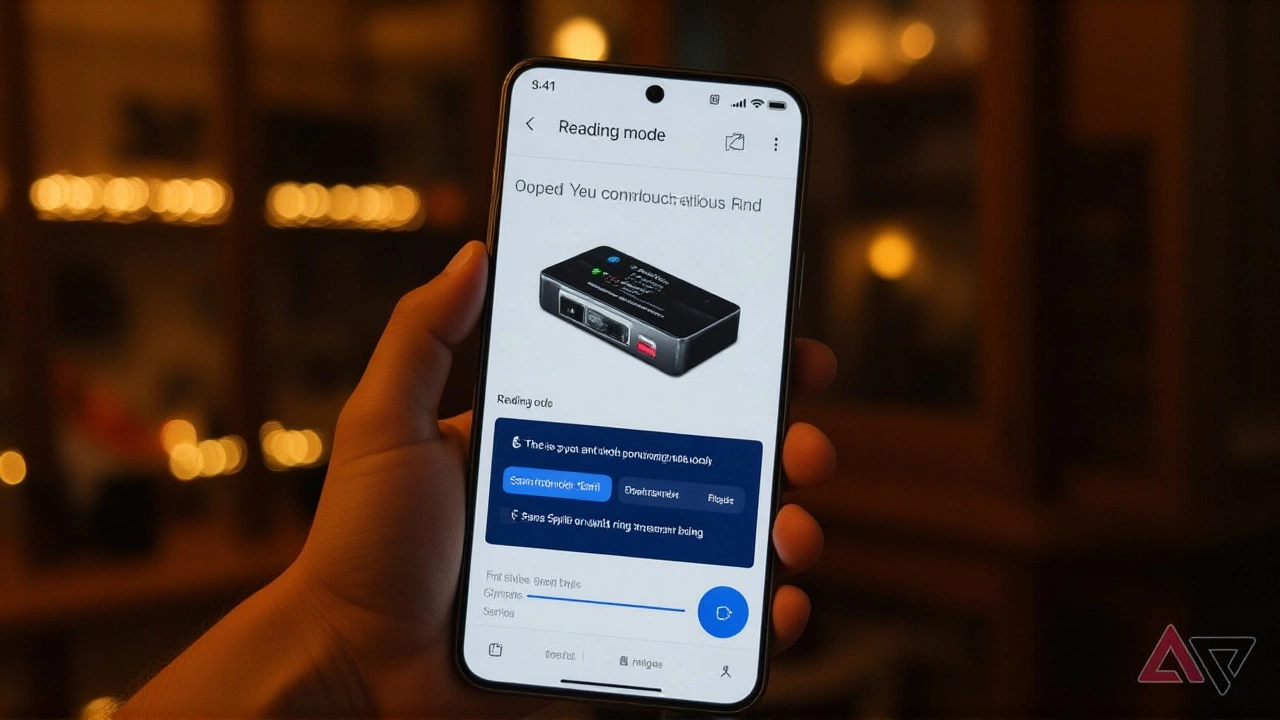
It turns out the secret to actually finishing an article isn't willpower—it's a button you've probably ignored. When Android Police published a recent first-person account about forcing Google Chrome for Android into reader mode, it struck a nerve with anyone who feels their attention span shrinking by the minute. The writer didn't just tweak settings; they claimed this simple switch "completely broke" their habit of skimming headlines and bouncing away.
The experiment took place on standard Android devices using the browser developed by Google LLC, headquartered in Mountain View, California. But here's the thing: this isn't some hidden developer trick or complex coding hack. It's a feature built right into the interface, waiting for users to tap it. And according to the report, once you start using it consistently, you stop scanning and start reading.
The Simple Switch That Changes Everything
Getting started is deceptively easy. You don't need to dig through experimental flags or install third-party apps. Just open any compatible website in Chrome. Once the page loads, look for the triple-dot menu in the upper-right corner—the standard "More" options icon. Tap that, and you'll see an option labeled "Show reading mode."
That's it. One tap strips away nearly everything that isn't essential to the article itself. No sidebars, no pop-up ads asking you to subscribe, no distracting navigation menus. Just the text. For the Android Police writer, removing the visual noise forced a shift in behavior. Without the clutter to distract them, the brain stopped looking for the next click and started processing the words on screen.
But wait—if a site doesn't support it? Chrome simply pops up a message saying "Reading mode is unavailable." It’s a small friction point, but one that highlights how not all web design is created equal. Still, for major news outlets and blogs, the feature works seamlessly.
Customizing Your Focus Zone
Once activated, the reading view slides up from the bottom of your screen as a dedicated sheet. This isn't just a black-and-white text dump. Google allows significant customization to reduce eye strain and improve comfort. Users can choose from three font styles: Sans Serif, Serif, or Mono. You can also adjust the font size by scrolling, making large blocks of text feel less intimidating.
Color matters too. The interface offers three background modes: Light, Sepia, and Dark. Many readers swear by Sepia for long-form content because it mimics the warmth of paper, reducing blue light exposure. These aren't just aesthetic choices; they're tools for accessibility and sustained attention. By controlling the environment, you control the engagement.
Why We Skim (And How to Stop)
Let's be honest: modern web design is engineered to break your focus. Bright buttons, autoplay videos, and infinite scroll feeds are designed to keep you clicking, not thinking. The Android Police writer noted that before using reader mode, their habit was to skim—scanning for keywords and moving on within seconds. It's a survival mechanism in an information-overloaded world.
Reader mode disrupts that loop. By presenting content in a static, clean format, it removes the "next best thing" temptation. There's no sidebar link to click. No comment section to argue in. Just the story. This forced simplicity encourages deeper cognitive processing. You read sentences instead of fragments. You follow arguments instead of chasing headlines.
Interestingly, this aligns with broader trends in digital wellness. Apps like Forest or Freedom block distractions entirely, but reader mode takes a subtler approach. It doesn't banish the internet; it just cleans up the room so you can think clearly.
A Broader Trend in Browser Design
This isn't isolated to Chrome. The concept of "reader views" has been evolving across platforms for years. In the past, enabling similar features in Chrome required navigating to `chrome://flags` and toggling experimental settings—a barrier that kept most casual users away. Now, it's front and center.
Other browsers are following suit. Vivaldi, for instance, offers simplified webpage displays, though its implementation differs slightly. Even desktop versions of Chrome have experimented with split-screen reader modes. The Perkins School for the Blind has even published guides distinguishing between desktop reader modes and mobile-specific apps, showing how deeply this functionality is embedded in accessibility standards.
The industry shift suggests a recognition that readability isn't just a luxury—it's a necessity. As screens get smaller and content gets denser, tools that prioritize clarity over chaos become invaluable.
What's Next for Digital Reading?
If this personal experiment holds true for others, we might see more default integrations of focus modes in future updates. Imagine if every article automatically loaded in reader mode unless you opted out. Or if AI could dynamically strip clutter based on your reading history.
For now, the power is in your hands. Try it today. Open Chrome, find that triple-dot menu, and hit "Show reading mode." Give yourself five minutes of uninterrupted reading. You might be surprised by how much you retain—and how little you miss.
Frequently Asked Questions
Does Chrome's reader mode work on all websites?
No, it does not. Chrome determines compatibility based on the page structure. If a site uses complex layouts or scripts that prevent clean extraction, you'll see a "Reading mode is unavailable" message. Most major news sites and blogs support it, but social media feeds and dynamic dashboards often do not.
How do I enable reader mode in Chrome for Android?
Open any article in Chrome. Tap the three vertical dots in the top-right corner. Select "Show reading mode" from the menu. If available, the page will transform instantly. No additional settings or flags are needed for current versions of the app.
Can I customize fonts and colors in reader mode?
Yes. Once active, a control sheet appears at the bottom. You can choose between Sans Serif, Serif, or Mono fonts. Adjust font size by scrolling, and pick from Light, Sepia, or Dark backgrounds to suit your lighting conditions and preference.
Why does reader mode help with skimming habits?
By removing visual distractions like ads, sidebars, and navigation links, reader mode reduces cognitive load. Without external prompts to click elsewhere, your brain is encouraged to stay focused on the text, promoting deeper comprehension rather than rapid scanning.